TAPCOP: AI predictions for real-time mobility
A one-stop solution for multi-modal mobility management
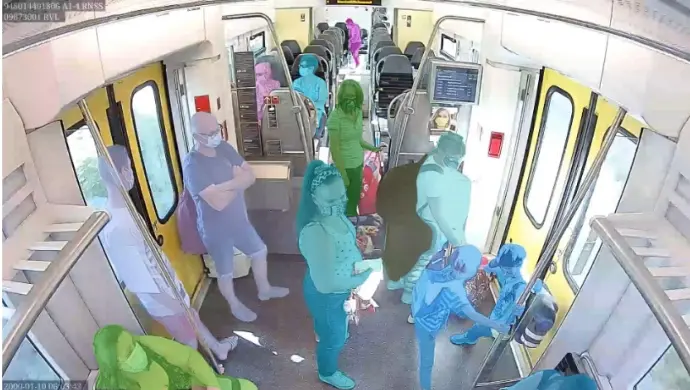

Mobility is a cornerstone of modern society, but cities across the world face daily challenges caused by congestion and overcrowding. When the capacity of public spaces is exceeded, the result is a breakdown in traffic flow, increased travel times, rising pollution, safety risks, and general discomfort for citizens. In the USA alone, it is estimated that traffic gridlock will cause an economic loss of USD 186 billion by 2030. Current countermeasures, such as traffic signs, detours, or on-site personnel, are often reactive and insufficient.
The TAPCOP project (2022–2026) addresses these issues by enabling advanced situational awareness and data-driven management of mobility flows. By fusing multiple data sources with AI-powered predictions, TAPCOP provides authorities with the tools to prevent congestion before it occurs and deliver real-time, proactive guidance to the public.
TAPCOP (Traffic AI Prediction of Common Operational Picture) is an ITEA research project that leverages AI-based sensors, secure multi-modal data fusion, and predictive analytics to monitor, forecast, and manage the movement of vehicles, pedestrians, bicycles, and public transport. The system provides authorities and stakeholders with a single dashboard that visualises the mobility situation in real time, predicts future developments, and suggests possible interventions. Importantly, TAPCOP extends beyond the control center: it also communicates directly with travellers pre-trip, on-trip, and on-site through social media, navigation systems, and mobile applications, helping people make smarter and more sustainable travel choices.
Urban authorities face recurring difficulties in managing congestion, preventing pollution and safety incidents, and influencing traveller behaviour. Traditional methods are largely reactive and limited to the physical environment - road signs, rerouting, staff deployment - without fully integrating predictive and digital solutions. TAPCOP closes this gap by providing insights, predictions, and control mechanisms to prevent mobility issues and overcrowding before they arise.
The project introduces a multi-layered approach: collecting real-time information across all transport modes, aggregating it into a privacy-aware operational picture, using AI to forecast mobility trends, recommending targeted interventions, and delivering personalised travel advice to the public. This holistic solution ensures that both authorities and citizens are better equipped to avoid bottlenecks and reduce the risks associated with congestion.
TAPCOP’s impact will be significant: a reliable view on current mobility, accurate short-term predictions of how situations will evolve, and proactive communication tools that empower both stakeholders and travellers. Each module is AI-driven and adaptive, improving over time as it learns from new data and scenarios. Potential beneficiaries include road authorities, municipalities, police forces, and event organisers managing large gatherings such as concerts, festivals, or football matches.
By delivering a one-stop mobility management solution, TAPCOP also contributes to the rapidly growing Mobility-as-a-Service (MaaS) market, projected to rise from USD 3.3 billion in 2021 to USD 40.1 billion by 2030.
TAPCOP brings together five partners from Belgium and Spain, combining expertise in AI, mobility, and innovation:
- Belgium:



- Spain:
By merging cutting-edge AI, multi-modal data fusion, and proactive traveller engagement, TAPCOP is set to transform the way cities manage mobility. The project’s results will provide authorities with the insights and tools they need to predict, prevent, and manage congestion and overcrowding in real time, making urban spaces safer, healthier, and more sustainable.
Project duration: October 2022 - April 2026
Project leader: Geert Vanstraelen, Macq, Belgium
Funded by:

DistriMuSe: Intelligent monitoring for health and safety
The aim of the DistriMuSe project is to advance intelligent systems for improving human health and safety through innovative sensing technologies.

This project focuses on developing unobtrusive and continuous monitoring solutions to support health, traffic safety, and industrial environments. Coordinated by VTT, DistriMuSe brings together 50 partners from 7 countries with a budget of approximately €35 million, co-funded by the European Commission and national funding agencies. It began on May 1, 2024, and will run for three years, extending the research from the NextPerception project.
DistriMuSe will focus on developing several key technologies to enhance monitoring capabilities across various sectors. The project will utilize unobtrusive and continuous monitoring methods, such as radar, lidar, camera-based, and wearable sensors, to provide comprehensive and accurate data. These technologies are designed to improve both coverage and accuracy, all while ensuring data privacy in compliance with GDPR and AI Act regulations.
- In healthcare, DistriMuSe aims to transition from reactive to proactive diagnosis and treatment by creating home-based monitoring systems. This includes advanced sleep monitoring technologies that achieve clinical accuracy, reducing the need for expensive laboratory studies. The project will also focus on activity and gait analysis to detect early signs of health issues, including cognitive decline.
- For traffic safety, DistriMuSe will develop advanced sensors to protect vulnerable road users (VRUs) like pedestrians and cyclists. These sensors will be integrated with driver monitoring systems (DMS) and vehicle-to-environment communication (V2X) technologies, creating a comprehensive safety solution.
- In industrial settings, the project will enhance safety by advancing collaborative robots, or cobots. These robots will be equipped with technologies to understand human presence and intentions, enabling safer human-robot interactions and more efficient task execution.
The technologies developed through DistriMuSe will contribute to:
- Improved Health Monitoring: Enabling proactive health management through home-based monitoring.
- Enhanced Traffic Safety: Protecting vulnerable road users and integrating advanced safety systems.
- Increased Industrial Safety: Facilitating safer and more efficient human-robot collaboration.
Overall, DistriMuSe aims to revolutionize how intelligent systems support human health and safety, creating safer and smarter environments across healthcare, traffic, and industrial contexts.
BRIGHTER: Developing faster and smarter micro-bolometer sensors
This type of technology could be extremely powerful, but is still under-exploited today.
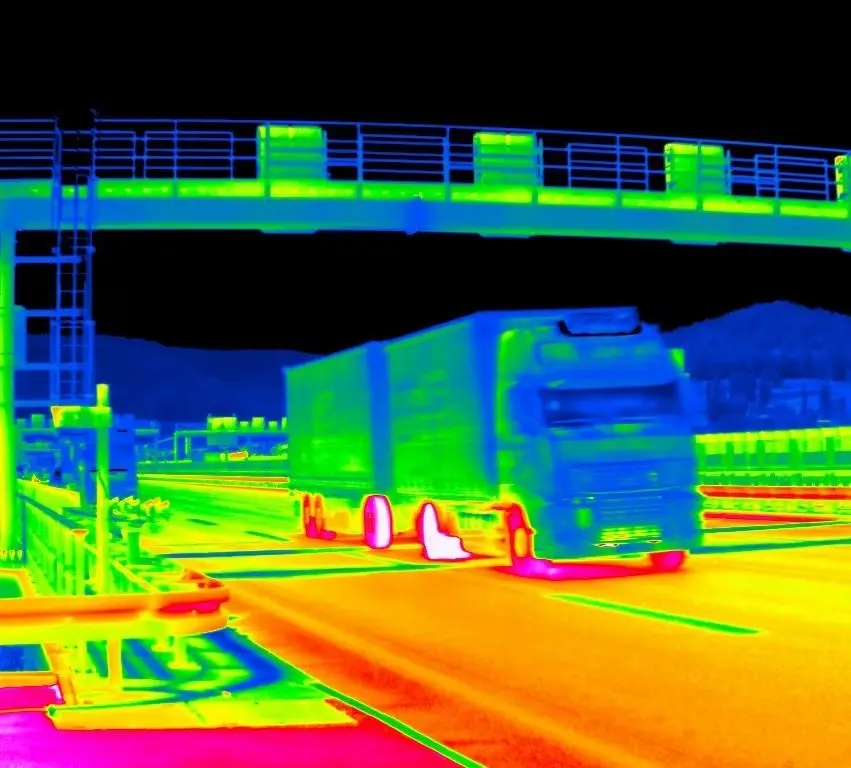
Micro-bolometer sensors are compact, light, low power, reliable and affordable infrared imaging components. They are ahead of the cooled infrared sensors for these criteria but lag behind them in terms of performance:
- Existing micro-bolometer technologies have thermal time constants around 10 msec. This is more than 10 times that of cooled detectors.
- Moreover, there is no multispectral microbolometer sensor available today for applications such as absolute thermography and optical gas imaging.
BRIGHTER will develop 2 new classes of micro-bolometer solutions to reduce the performance gap with their cooled counterparts:
- Fast thermal micro-bolometer imaging solutions with time constant in the 2.5 to 5 msec range, that is to say 2 to 4 times faster than today’s micro-bolometer technologies. Read out integrated circuits able to operate up to 500 frames per seconds will also be investigated.
- Multi-spectral microbolometer solutions with at least access at the pixel level to 2 different wavelengths in the range 7 to 12 μm. The developments will focus on pixel technology, Read Out Integrated Circuit, low power edge image signal processing electronic, optics, and image treatment algorithms.
All stakeholders of the value chain are involved: academics, RTO, micro-bolometer manufacturer, algorithm developers, camera integrators and end users. They will collaborate to define the best trade-offs for all use-cases.
The two new classes of products that will spring from BRIGHTER will generate concrete benefits. They will make it possible to:
- save on material and energy in the manufacturing sector
- perform efficient & affordable monitoring of infrastructures and trains
- contribute to autonomous vehicles sensor suite
- decrease the road casualties among Vulnerable Road Users
- better control gas emission in cities and industrial areas
These new usages served by the European industry will allow Europe to increase its market share in the infrared imaging industry.

CORFOU: Developing a radar to understand crowd movement
New technologies are now being considered to monitor crowds in order to avoid incidents during mass events and to facilitate day-to-day mobility in cities. ULB's wireless communications group has developed a crowd density sensor, MUFINS, which is now being exploited economically by the company Macq.
The aim of the project "Design of a radar for monitoring crowd dynamics" is to design a complementary sensor based on radar technology to support the analysis of crowd dynamics, in particular the flow of people. This would enable longer-term density predictions and the detection of specific group movements.
A prototype will be used throughout the project to acquire data on two reference sites. The crowd will be analysed using classification techniques applied to the micro-Doppler analysis of the radar signals.
SINTRA: AI and multimodal sensing for advanced security monitoring
SINTRA is an open data-streaming AI platform that facilitates cross-coordination & cross-organizational interoperability in order to ensures trustworthiness in the safety and security monitoring.
SINTRA is an upcoming ITEA project poised to revolutionize the protection of critical infrastructure. As we embark on this journey, SINTRA aims to enhance resilience by creating an open data-streaming AI platform.
Through advanced multi-modal sensing and AI analysis, it will offer a comprehensive view of safety and security, enabling stakeholders to proactively detect and respond to complex anomalies. SINTRA project is contributing to a more secure and interconnected future.
The SINTRA project aims to deliver an open platform that enables cross-organizational interoperability and ensures trustworthiness in the safety and security monitoring. The platform facilitates cross-coordination between involved stakeholders, aids information sharing, management, and analysis from the public and private security operators, thereby enabling global situational awareness in the infrastructure threats.
Technology-wise, the project envisions a significant step beyond the state-of-the-art by the synthesis of innovative multi-modal sensing & AI-powered combined data analysis. Incorporation and fusion of acoustic, visual, radar, multispectral, LiDAR, ToF or environmental sensor modalities together with already existing data sources (police data, logistic timetables, social media data) helps to obtain a multi-faceted, comprehensive view on the security/safety of the infrastructure situation.
The consortium is composed of partners from six countries: The Netherlands, Turkey, Belgium, Finland, Portugal, and Germany. The benefits of the SINTRA platform will be demonstrated on several critical infrastructure types of end-users: logistic hubs (Port of Moerdijk), airports, harbors, construction sites, shopping centers and road networks.
TORRES: Data-driven insights for metropolitan traffic management
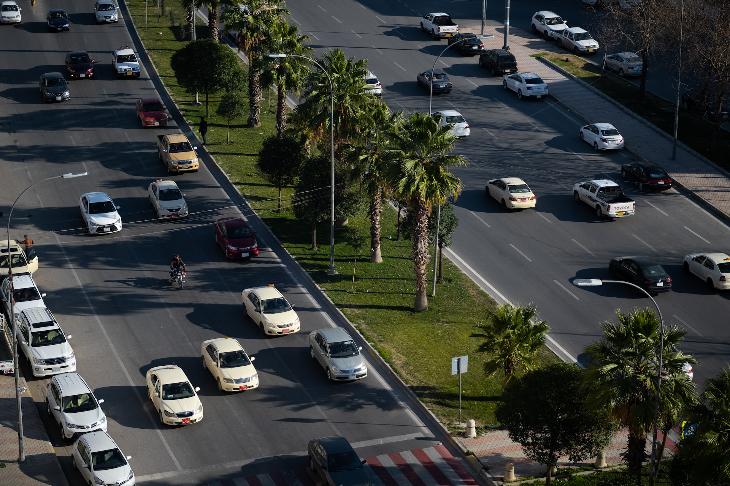
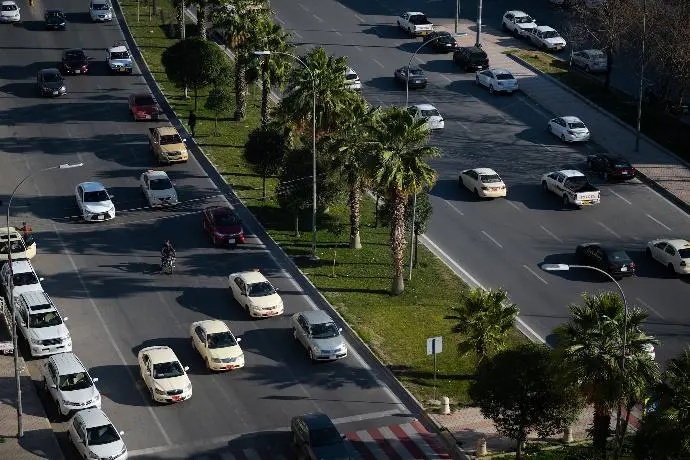
Intelligent Transport Systems (ITS) are intended to have a positive impact on society, for example, they are used as an aid in the reduction of traffic congestion, traffic accidents and air pollution, all of which directly impact general well-being.
This project aims at developing both a framework and methodology for the monitoring of heterogeneous traffic data. The emphasis lies on developing data-driven models for traffic data imputation, interpolation and forecasting as well as providing intuitive tools and visualisations for the study of the traffic situation as well as its evolution at the level of a metropolitan area, with Brussels as the central use case.
The goal is to provide public authorities and infrastructure managers with the tools to better understand and quantify the impact of their policies on their citizen’s well-being. Also, vice versa, the project provides a way to disseminate the impact of political choices to the greater public, making it easier for citizens to embrace them.
Traffic data comes in many forms, ranging from individual recognitions by ANPR cameras to floating car data provided by large data providers. The challenge lies in properly anonymizing, centralizing and fusing these different data in order to produce more accurate and useful information than what can be provided by any individual data source alone.
Partners :
- ULB: Machine Learning Group (MLG)
- VUB: Electronics and Informatics Department (ETRO)
DRiVING: Developing smarter, real-time adaptive traffic cameras
Distributed Recognition Infrastructure for Intelligent traffic camera Networks

The DRiVING Project (Distributed Recognition Infrastructure for Intelligent Traffic Camera Networks) focuses on improving the recognition systems in traffic cameras to ensure they perform optimally in diverse real-world conditions. Currently, recognition algorithms in traffic cameras are often static and may not perform well under varying environmental conditions. This project aims to develop an advanced engine and methodology that continuously assesses and updates these systems for better performance.
A key innovation of the DRiVING project is the transition from a traditional push architecture, where traffic cameras send data to a central unit, to a bidirectional system. This allows the central unit to monitor the cameras and update their recognition algorithms in real-time, ensuring that they continue to adapt to changing conditions.
The project is being developed in collaboration with the Vrije Universiteit Brussel (VUB) and their Electronics and Informatics Department (ETRO). Their expertise in electronics and informatics plays a vital role in the development of the recognition engine and methodologies.
The DRiVING project is set to improve traffic management by providing smarter, more adaptive traffic cameras, which will contribute to safer and more efficient urban mobility. By enhancing the performance of traffic cameras, the project supports the development of smart cities, helping them tackle challenges such as congestion, road safety, and environmental sustainability.
In conclusion, the DRiVING project is a significant step toward advancing traffic monitoring systems, making them more adaptive and efficient in real-time, and contributing to the growth of smarter, safer cities.
Partner : VUB: Electronics and Informatics Department ETRO
NextPerception: Advancing smart sensing for patient care and automated driving
A new European project that develops technology to solve two growing problems: patient-centric care and automated driving.

A new EU-wide project was launched in May to pave the way for next-generation intelligent sensing for health and automotive solutions. In health care, the EUR 30 million project will improve early detection and prevention of health deterioration by enhanced monitoring possibilities. For the automotive industry, it will improve the safety of pedestrians and cyclists and provide an important step forward to realise the sensing solutions needed for automated driving.
Sensing technologies have become a part of daily living, and people increasingly trust smart complex systems to make decisions that directly affect their health and wellbeing. This is evident especially in healthcare, where systems monitor even the slightest changes in patient’s health, and in traffic, where automated driving solutions are gradually taking over the control of the car. The accuracy and timeliness of the decisions depend on the systems’ ability to build a good understanding of both people and their environment.
“As decision-making is increasingly transferred from people to machines in potentially risky circumstances like healthcare or traffic, it is crucial to ensure that the underlying sensing and reasoning technologies are safe and reliable,” comments NextPerception project manager, Senior Scientist Johan Plomp from VTT.
To improve this systems-led decision-making and respond to the need for versatile, secure, and proactive smart sensor systems, the NextPerception consortium brings together major players from European healthcare, wellbeing and automotive domains.
Starting work on three critical use cases
While the potential of smart sensing systems reaches far beyond healthcare and traffic, the NextPerception project will start work on three use cases to demonstrate the feasibility of the approach to solve these challenges.
”The value of the project is not only in the development of pro-active and trustworthy decision making sensor platforms with embedded intelligence, but also in the application of these in a number of practical use cases in order to come to market-ready solutions” says NextPerception technical coordinator Patrick Pype, director strategic partnerships at NXP.
The health and wellbeing dimension focuses on continuous health monitoring that supports patient-centric healthcare and patients’ active role in the care process. The first of the selected use cases, integral vitality monitoring, develops technologies that can measure and monitor health, behavior and activities especially in people that require increased medical attention or care.
The other two use cases develop solutions that improve traffic safety and tackle key challenges specifically related to automated driving in urban environments and challenging weather conditions.
The main goal of the driver monitoring use case is to develop a monitoring system that can classify both the driver’s cognitive state like distraction, fatigue or drowsiness and their emotions, such as anxiety, panic or anger. The system will also monitor the driver’s intention (turn left or right), as well as the activities and position of the driver and other occupants inside the vehicle. This information will be used for autonomous driving functions, including takeover-request and driver support.
Finally, the third initial use case seeks to improve safety and comfort to all road users – including pedestrians and cyclists – at intersections. It will demonstrate the ability to detect the presence of traffic participants, determine their positions with high accuracy and track their motion and intent with high reliability. Specifically for pedestrians and cyclists, the aim is to provide information on trajectories and avoid potential conflicts.
A truly European cooperation
The work of the NextPerception project was kicked off in May 2020, and it will run for three years. In total, the consortium consists of 43 partners, representing both business and academia, from seven countries, and it is coordinated by VTT Technical Research Centre of Finland. The project is jointly funded by the European Commission and national funding agencies under the ECSEL joint undertaking.
MIRAI: Advancing intelligent planning and operation for IoT and edge systems
Machine intelligence techniques for smart and sustainable planning and operation of IoT and Edge computing applications

MIRAI will enable smart and sustainable planning and operation of IoT and Edge computing applications through machine intelligence that will supplement the traditional vertical scaling approach with horizontal scaling of IoT and edge computing applications amongst edge devices. The result will be the MIRAI Framework Building Blocks (MFBB) with main components:
- AI algorithms and mechanisms for energy-efficient and resource-efficient deployment and run-time adaptation of IoT and edge computing applications.
- Distributed and composable AI models and techniques that scale vertically/horizontally to guarantee high-quality decision making.
- Advanced AI algorithms and techniques for continual and evolving learning under uncertainty and noise, that are critical factors for IoT applications in vital sectors like industry and transportation.
- Innovative methodologies for model development, training, and evaluation with no direct access to labelled data.
- New solutions to guarantee trust and quality assurance in a heterogenous ecosystem.
Funding by EUREKA

C-MobILE: Improving road safety and efficiency with connected mobility solutions
The C-MobILE (Accelerating C-ITS Mobility Innovation and depLoyment in Europe) vision is a fully safe & efficient road transport without casualties and serious injuries on European roads, in particular in complex urban areas and for Vulnerable Road Users. We envision a congestion-free, sustainable and economically viable mobility, minimizing the environmental impact of road transport.

MobILE will set the basis for large scale deployment in Europe, elevating research pilot sites to deployment locations of sustainable services that are supported by local authorities, using a common approach that ensures interoperability and seamless availability of services towards acceptable end user cost and positive business case for parties in the supply chain.
The C-MobILE project will produce folowing key results:
C-ITS framework defined in partnerships with major stakeholders for proposing key deployment enabling solutions on existing pilot sites, including business cases
Strategic Research Agenda defined for key researching and innovation areas that promote sustainable C-ITS deployments and will lead towards automated transport in Europe
Assessment including CBA of the cumulative real-life benefits of clustering C-ITS applications and integrating multiple transport modes in the C-ITS ecosystem
Open secure large-scale C-ITS deployment of new and existing applications demonstrated in complex urban environments interoperable across countries involving large groups of end users
Provide an open platform towards C-ITS sources to support deployment of service concepts on commodity devices, validated by developer communities
Validated operational procedures for large-scale deployment of sustainable C-ITS services in Europe.
This project has received funding from the European Union’s Horizon 2020 research and innovation programme under grant agreement No 723311.

PoliVisu: Using big data to transform democratic policy decisions
PoliVisu is a Research and Innovation project designed to evolve the traditional public policy making cycle using big data.

The aim is to enhance an open set of digital tools to leverage data to help public sector decision-making become more democratic by:
(a) experimenting with different policy options through impact visualisation and
(b) using the resulting visualisations to engage and harness the collective intelligence of policy stakeholders for collaborative solution development.
Working with three cities to address societal problems linked to smart mobility and urban planning, the intention is to enable public administrations to respond to urban challenges by enriching the policy making process with opportunities for policy experimentation at three different steps of the policy cycle (policy design, policy implementation, and policy evaluation).
Experimentation of policy options will enable the cities to tackle complex, systemic policy problems that require innovative thinking to develop transformative solutions.
This project has received funding from the European Union’s Horizon 2020 research and innovation programme under grant agreement No 769608.

TASPAIR: Smart, privacy-aware traffic recognition for urban and national roads
Traffic Analysis while Sustaining Privacy with Artificial Intelligence for Recognition
TASPAIR is a Eurostars collaboration project between the Dutch company ViNotion and Macq.
A real-time sensor system to register all details of traffic in cities and national roads. We deliver an intelligent sensor that recognizes the vehicles license plate, their speed, type, brand, model, colour, behaviour, etc. The image sensors, the image analysis and the infrared lighting will be embedded in a single casing so that only the low-bandwidth traffic information needs to be transmitted without the need for streaming video. The combination of new state of the art hard- and software will make a breakthrough in make and model recognition in all circumstances using Deep Learning / Convolutional Neural Networks while maintaining traditional ANPR product features. In this joint initiative of Macq and the Dutch company ViNotion both partners have complementary skills and home markets.
Funding by Eurostars (EUREKA)
Partner : VINotion