38% Fewer traffic accidents with average speed control
A groundbreaking study conducted by UHasselt, Nuhma, and s-Lim has revealed that the introduction of Average Speed Control on municipal roads in Limburg leads to a significant 38% reduction in traffic accidents compared to similar roads without such controls.
This comprehensive research carefully isolated the effect of Average Speed Control from other influencing factors - such as improvements in vehicle safety, changes in traffic volumes during the COVID-19 pandemic, and general trends in road safety - by analyzing extensive datasets covering accident locations, road characteristics, and installation timelines of Average Speed Control systems.
At Macq, we are proud that the Average Speed Control systems referenced in this study utilize our advanced ANPR (Automatic Number Plate Recognition) technology, which enables precise and reliable speed monitoring over extended road sections. This technology not only helps reduce speeding but also encourages safer driving behavior and smoother traffic flow.
Jan Neyens, director of s-Lim, emphasized the importance of data-driven insights:
"Our goal is to enable municipalities to weigh the costs and benefits of Average Speed Control based on solid evidence, helping them make informed decisions about road safety investments."
Professor Wim Marneffe of UHasselt highlighted the key finding:
"Our goal is to enable municipalities to weigh the costs and benefits of Average Speed Control based on solid evidence, helping them make informed decisions about road safety investments."
While the study did not find significant changes in the severity of accidents, the clear reduction in accident numbers demonstrates the effectiveness of Average Speed Control in preventing collisions and enhancing safety.
We invite you to read the full article and watch the video coverage of this important research here
How smart mobility can help cities cut CO₂ emissions
The year 2024 will be remembered as a critical juncture in the fight against climate change. Atmospheric CO2 levels at the Mauna Loa Observatory spiked by an unprecedented 3.58 parts per million (ppm), marking the fastest annual increase ever recorded (see Figure 1: Atmospheric CO2 Concentration at Mauna Loa (ppm)). This sharp rise, driven by fossil fuel combustion, devastating wildfires, and weakened natural carbon sinks like forests, pushed global temperatures dangerously close to the 1.5°C threshold outlined in the 2015 Paris Agreement.
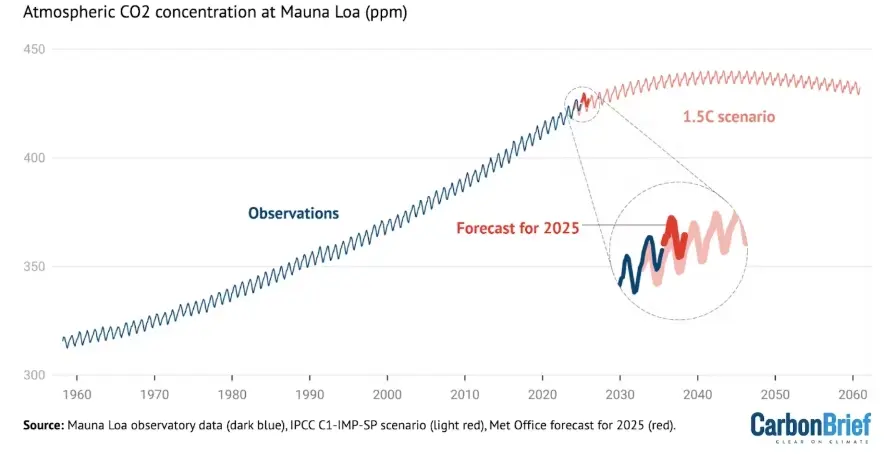
As these numbers paint a stark picture of the challenge before us, the question arises: what can be done to reverse this alarming trend? At Macq, we believe the answer lies in leveraging smart mobility technologies to create healthier, more sustainable cities.
Transportation: A Key Contributor to CO2 Emissions
Transportation remains one of the largest sources of fossil fuel emissions, contributing significantly to rising CO2 levels. Urban areas, in particular, face a double burden: increasing mobility demands and growing environmental concerns. Addressing this requires bold solutions that not only manage traffic but also minimize its environmental impact.
The Role of Macq in Tackling CO2 Emissions
Macq’s commitment to promoting safer, healthier environments has led to the development of innovative solutions that empower cities to reduce their carbon footprint. One such solution is our Low Emission Zone (LEZ) module, a powerful tool designed to combat rising emissions by targeting pollution at its source.
The LEZ module allows cities to designate areas where high-polluting vehicles are restricted. This approach encourages the adoption of cleaner transportation options, such as electric vehicles or public transport, and reduces overall CO2 emissions in urban zones. The result? Improved air quality, healthier communities, and a tangible step forward in the global fight against climate change.
But the LEZ module is just one piece of the puzzle.
Macq’s broader portfolio of smart mobility solutions complements these efforts by:
- Optimizing traffic flows: Reducing congestion and idle times through intelligent traffic management systems.
- Providing actionable insights: Empowering policymakers with accurate, real-time data to make informed decisions.
- Encouraging sustainable mobility: Promoting eco-friendly commuting options and fostering behavioural change among city residents.
- Turning a crisis into an opportunity
While the record-breaking rise in CO2 levels is undeniably alarming, it also serves as a wake-up call to act decisively. The technologies exist to make a difference, and Macq is proud to be at the forefront of this transformation. By partnering with cities, we’re proving that smart solutions can not only address current challenges but also pave the way for a sustainable future.
Join Us in Building Cleaner, Smarter Cities
The fight against climate change is far from over, but it’s a fight we can win - together. Whether you’re a policymaker, a city planner, or a business leader, now is the time to act.
Let Macq help you implement smart mobility solutions that reduce emissions, improve air quality, and make your city a greener, healthier place to live. Together, we can turn the tide on rising CO2 levels and create a future we can all be proud of.
Let’s make the change, starting today!
SCaaS delivers proven road safety impact
We are honoured to share with you that our innovative SCaaS (Section Control as a Service) has been featured in the news article by Bee Smart City in their last Mobility Report.
For those unfamiliar with SCaaS, this system enables towns and cities with limited financial resources to acquire high-tech road safety enforcement solutions, including cameras and software, without any upfront investment costs, as data shows that this solution drastically reduces speeding and sustainably changes driving behaviour.
One successful example of the effectiveness of SCaaS in the city of Bilzen, where significant changes in driving behaviour were observed within just three months of implementing the system. Here's an example of the trend in Bilzen drivers adhering to speed limits where grey represents before SCaaS and yellow after installation:

With fewer drivers exceeding speed limits, the reduction ranged from around 10% to over 40%, depending on the location. According to the Belgian institutional agency VIAS, the implementation of the Speed Section Control solution led to a 30% decrease in the average number of accidents and a remarkable 56% reduction in severe accidents involving serious injuries or fatalities.
SCaaS is the perfect solution for any town or city wishing to equip itself with high-performance systems that make a real difference. Moreover, in Macq we provide services to restrict access to certain urban areas, allowing only specific types of vehicles into restricted zones during designated times for enhanced safety.
Macq is dedicated to optimizing mobility and ensuring a sustainable future for all, by giving policymakers the tools they need for smart, tailored decisions.
Discover more about SCaaS services, permitting our system installation without any upfront investments, in this short presentation video.
And discover in detail the complete Bee Smart City Mobility Report by clicking here:
How a regional ANPR model transformed police operations
For years, the police zone had been using Macq ANPR cameras mainly for enforcement, generating fines and monitoring speed. However, the need for a more advanced and proactive approach quickly became clear. Officers wanted to use their ANPR data not only to detect violations, but also to identify stolen vehicles, track cars involved in criminal activities, and intervene in real time.
The previous system made this difficult. If a suspicious vehicle passed an ANPR point without speeding, the police had no way of knowing it had been there. As more cameras were added, the federal system also became saturated, limiting its ability to process data efficiently.
To overcome these challenges, the police worked with CIPAL and SypaL Schoubroek to implement a new regional ANPR model. Thanks to the reliability and performance of the Macq ANPR cameras already installed, the transition was smooth and opened the door to a much more powerful way of working.
With the new RAS system, suspect vehicles can now be placed on a blacklist. When one of these vehicles passes any Macq ANPR camera, officers receive an instant alert and can react immediately. Real-time data is now accessible directly from tablets, allowing police units to intercept vehicles faster and in a much more coordinated way.
Another major advantage is data sharing. The regional system enables collaboration between different police zones and the federal control room, which can access the same information and guide patrols more effectively. This shared approach strengthens safety on a broader scale.
The regional ANPR model developed by CIPAL and SypaL Schoubroek is fully GDPR-compliant, ensuring that all operations respect privacy and legal requirements. Combined with the high performance and accuracy of Macq ANPR cameras, it provides a modern, efficient and future-proof solution for proactive policing.
This success story shows how strong partnerships and reliable technology can transform ANPR from a simple enforcement tool into a powerful system that improves security, speeds up intervention, and supports smarter policing across entire regions.