Encourage safer driving behaviour by addressing the real danger of speed.
Excessive speed is a leading cause of severe and fatal accidents, with even small speed increases greatly raising the risk of serious injury. Average Speed Enforcement reduces this risk by encouraging consistent, safer driving over an entire road section.
>99%
More than 99% of drivers respect the speed limit when average speed enforcement is applied
-56%
Reduction in fatalities and serious injuries on roads equipped with average speed control
Why average speed enforcement saves lives
Speed enforcement is most effective when it changes behaviour - not when it surprises drivers at a single point.
Average speed enforcement does exactly that. By monitoring speed over a longer distance, it discourages sudden braking, aggressive acceleration and risky driving patterns that often lead to severe accidents.
This approach creates calmer traffic, fewer dangerous manoeuvres and significantly safer roads for all users - drivers, cyclists and pedestrians alike.
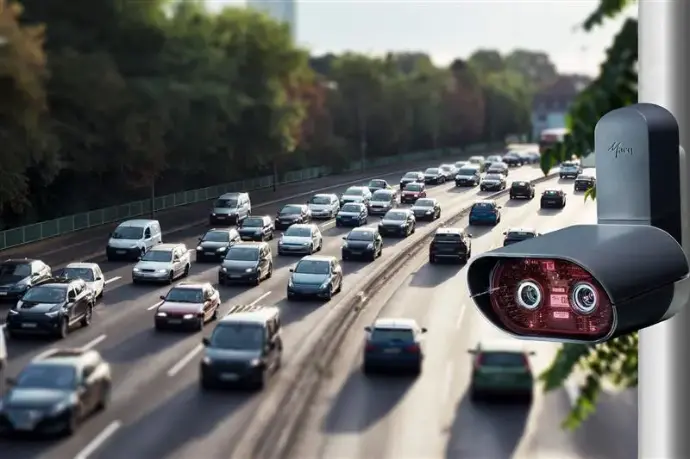

How average speed enforcement works
Speed section control, also known as average speed control, reduces speeding by encouraging consistent and predictable driving behaviour. By measuring a vehicle’s average speed between two calibrated points, it prevents short-term speeding bursts that often lead to dangerous situations.
When a violation occurs, an automated enforcement file is securely generated with all required data - including license plate images, timestamps and speed details - and processed centrally in a fully encrypted environment.
Success Story
Average Speed Control leads to 38% Reduction in Traffic Accidents in Limburg, Belgium.
Independent research by UHasselt, Nuhma and s-Lim shows that average speed control reduces traffic accidents by 38% compared to similar roads without enforcement.The study confirms its effectiveness as a data-driven road safety measure using Macq’s ANPR-based technology.